
Subtotal
$0.00
Witness to Time and Transformation
Born and based in Izmir, Türkiye, Zümrüt Özmen has spent more than four decades transforming lived experience into visual testimony. Her artistic journey began after completing studies in the Graphics Department of the Izmir Education Institute and later at Anadolu University in Eskişehir. She then taught painting and art history for fifteen years before opening her first exhibition at the Izmir Painting and Sculpture Museum in 1981.
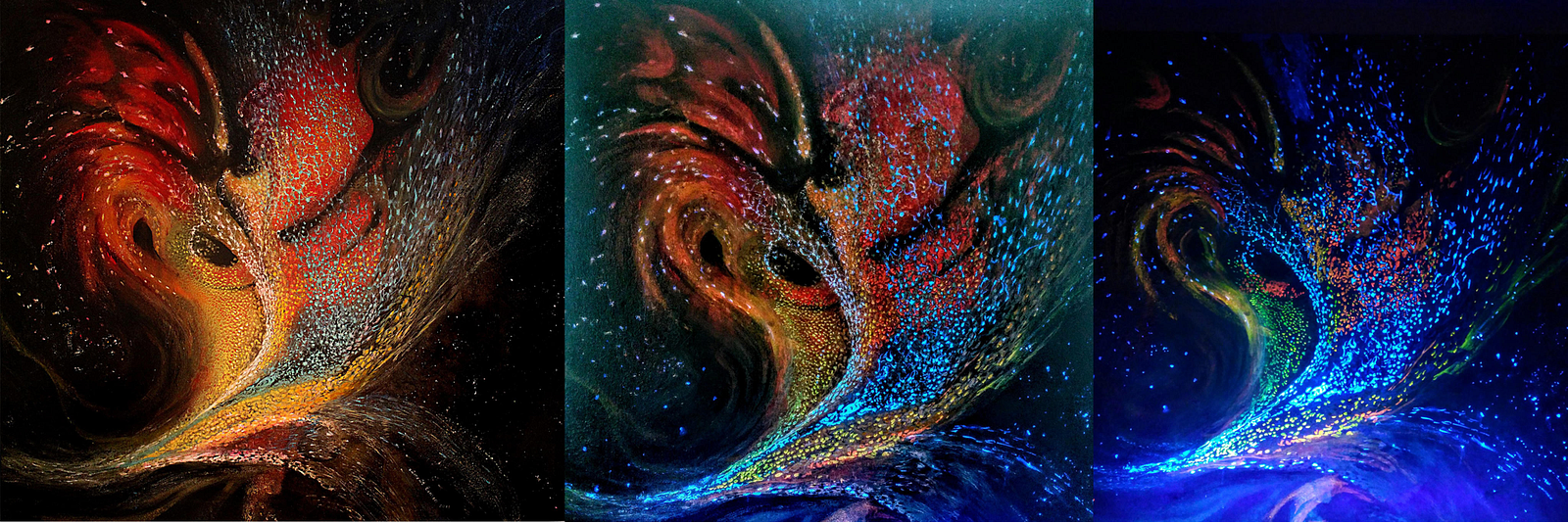
Throughout her career, Özmen has followed a path that unites technical mastery with moral inquiry. Her paintings respond to the spirit of the times she lives in, shifting from early social realist themes to explorations of gender, myth, and inner existence. Using phosphorescent paints and unconventional materials, she captures the pulse of an era while illuminating the enduring questions of conscience and humanity.
For Özmen, art is both record and revelation. “The artist,” she explains, “is like the ant carrying drops of water to a burning forest. Even a small act keeps the conscience alive.” This belief shapes her conviction that art must bear witness, preserving moral awareness amid social transformation.
The Individual and the Collective Soul
At the heart of Özmen’s philosophy is a conviction shared by thinkers from Rumi to Gandhi: that transformation begins within the individual. She sees the artist’s task as cultivating that inner renewal and extending it outward into society. Her guiding idea, “If you change the individual, the world will change too,” defines both her creative process and her teaching ethos.
For her, painting is not only a visual act but also an ethical stance. She views art as a moral responsibility and an ongoing dialogue between emotion and intellect. Each composition, whether depicting figures, relationships, or landscapes, becomes an opportunity to reflect on truth, justice, and empathy. Through this lens, art is not decorative but essential—a means to awaken conscience and preserve memory.
Reflections of the Age
Over the years, Özmen’s subjects have mirrored the shifting realities of her time. Early in her career, she focused on social realist depictions of working life and community resilience. After marriage, her attention turned to human relationships, particularly the evolving dynamics between men and women in modern society. She later began reinterpreting Anatolian cultural symbols through contemporary forms, blending regional motifs with universal emotion.
Her thematic evolution reveals an artist who sees no division between the personal and the political. Events that shake humanity also find their way onto her canvas. She has painted in response to the Gezi Park protests in Istanbul, the Soma mine disaster, the humanitarian crises of Myanmar and Haiti, and the isolation of the pandemic. Each image channels grief, endurance, and moral urgency without resorting to propaganda.
Even in moments of global turmoil, Özmen continues to produce with hope. The pandemic years, which she calls “a golden opportunity for all visual artists,” became a period of introspection and discovery. While confined at home, she turned inward to examine space and existence, using painting as a tool for spiritual exploration.
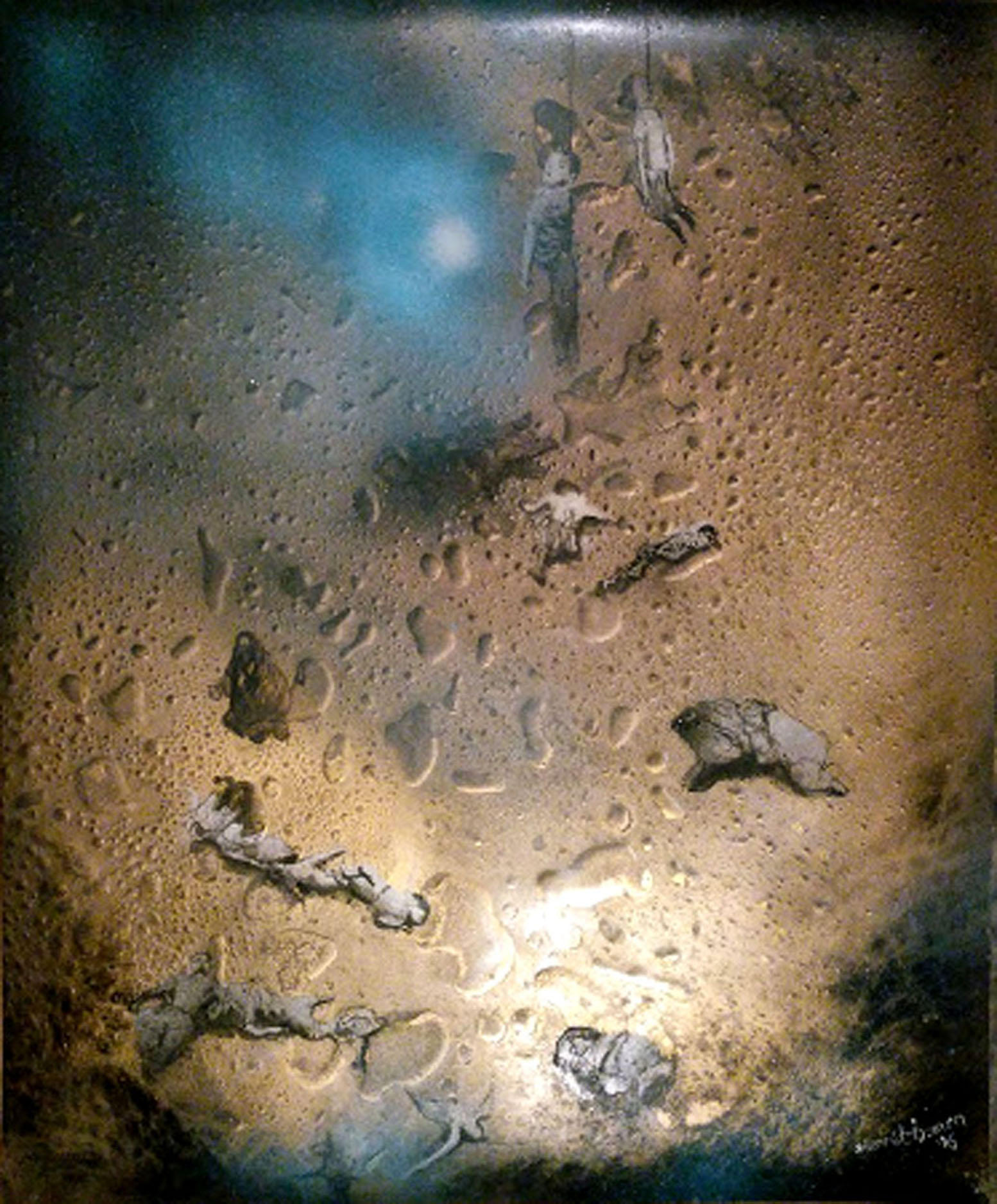
Myanmar from Zümrüt Özmen
Art as Emotional Responsibility
For Zümrüt Özmen, art that does not touch emotion or provoke thought cannot be called art. She believes that to live as an artist is to bear witness and that indifference is the true opposite of creation. This conviction extends beyond content to method. Her figurative compositions are often infused with radiant color, phosphorescent highlights, and textured layering that evoke both dream and testimony.
She views creativity as an act of healing, capable of uniting fragmented individuals within a fragmented age. “Art is the most human side of humanity,” she says. “Through it we express feelings, create collective gatherings, and recover from solitude.” In a world overwhelmed by information, her art offers clarity through sincerity.
Technology, Collectivity, and New Audiences
Özmen observes that the landscape of art has changed profoundly in recent years. The digital age has multiplied opportunities for visibility while also spreading distortion and misinformation. Yet she chooses to see this transformation as an opening rather than a loss. The same networks that spread falsehood can also connect artists across continents, fostering collaboration and shared purpose.
She notes the rise of collective art practices that bring together disciplines once considered separate. Contemporary artists, she explains, now reach audiences through workshops, online seminars, and self-published platforms that blend education and exhibition. For Özmen, this democratization of art is both challenging and liberating. It redefines success not as fame or sale but as communication and empathy.
Institutional and Social Support
In her reflections on the relationship between artists and institutions, Özmen calls for both moral and practical assistance. Governments and cultural organizations, she believes, should help artists through fair promotion, transportation aid, and accessible permits. Yet she also insists that true support must protect artistic freedom. To sustain creativity, institutions must respect diversity of voice and allow art to question established systems.
Such support becomes especially critical in times of instability, when artists often shoulder the task of collective healing. By enabling expression rather than restricting it, society honors the very qualities that make it humane—curiosity, compassion, and imagination.
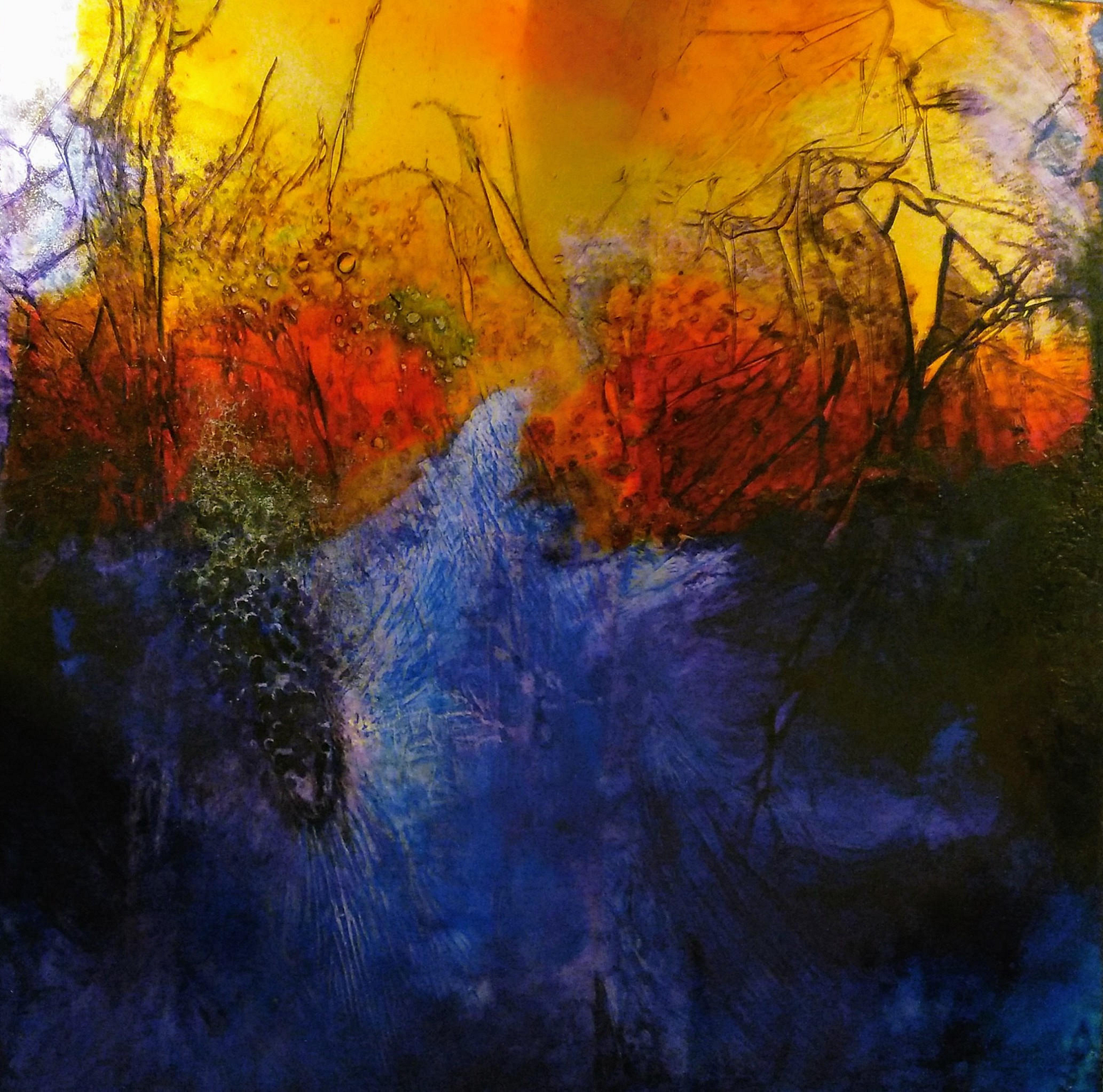
Immigration from Zümrüt Özmen.
Visionary Purpose and Human Continuity
To Zümrüt Özmen, the artist is a visionary figure who guides humanity not by policy but by perception. Every genuine artwork, she believes, contributes to human development simply by recording truth and emotion. Even if its influence is not immediate, it endures as a signpost for the future. “Unlike politicians,” she remarks, “the artist’s gain is to serve humanity and nature.”
This sense of service runs through her worldview. Art, for her, is a collective moral enterprise, a bridge between generations that ensures continuity of thought and feeling. In recording the invisible—those fleeting moments of conscience, love, fear, and beauty—artists create the spiritual archive of civilization.
Turning Life into Art
In her closing reflections, Özmen warns against imitation and superficiality in the age of mass production. She laments a world where truth is commodified and people are reduced to products, yet she sees art as the antidote. Through art, she believes, humanity can reclaim meaning, resist manipulation, and cultivate awareness.
Her advice to young artists is both practical and philosophical. Every life, she says, is short and unrepeatable; therefore, the task is to turn life itself into a work of art. To influence rather than be influenced, one must commit to education, research, and fearless self-examination. Only by confronting personal fears and separating inherited values from authentic ones can the artist find an original voice.
“Art,” she reminds, quoting Stefan Zweig, “is not about making the visible, but about making the invisible visible.” For Zümrüt Özmen, this is both a declaration of purpose and a guiding truth. In a fragmented world, her paintings continue to reveal what often goes unseen—the resilience of conscience, the depth of emotion, and the enduring faith that beauty and truth remain possible.