
Subtotal
$0.00

Arie Otten is a Dutch contemporary artist who lives and works in Apeldoorn, the Netherlands. Over the past fifteen years as a full-time artist, Otten has developed a prolific and emotionally charged practice that explores the nature of the sublime and humanity’s enduring attempt to define it. Before dedicating himself entirely to art, he spent over two decades working as an ambulance driver. This earlier career, marked by urgency and intimate encounters with life and death, continues to shape the intensity, speed, and emotional depth of his creative output.
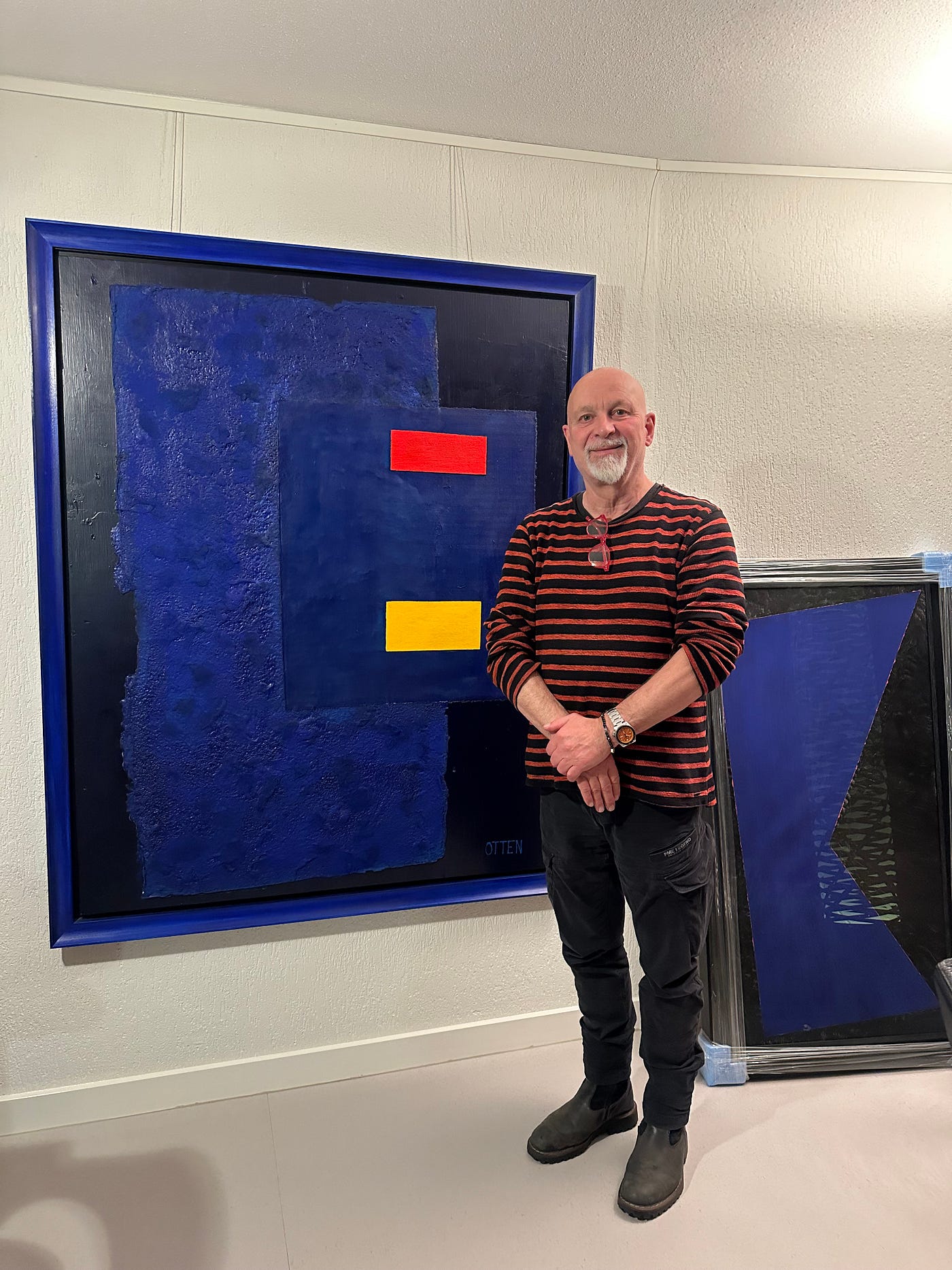
Otten is largely self-taught, yet his work reveals a striking maturity in both concept and execution. He often works rapidly — sometimes producing two or three pieces in a single day — guided by instinct and immediacy. Bold gestures, raw surfaces, and layered textures characterize his canvases. For Otten, painting becomes an act of awareness: a concentrated acknowledgment of the fleeting window of being present. The certainty of death, the fragility of existence, and the emotional weight of lived experience echo through his figurative and abstract compositions.
Working across multiple mediums, Otten paints on canvas and wooden panels, frequently incorporating discarded materials from construction sites. This use of reclaimed elements reflects both practical resourcefulness and a philosophical engagement with impermanence. Faces appear often in his work, sometimes abstracted, fragmented, or rendered with naïve intensity, revealing a deep fascination with human expression that stems directly from his years in emergency service. In these faces, viewers encounter vulnerability, resilience, and the “unbearable lightness of being,” translated into color and gesture.
His artistic influences span expressive and material-driven traditions. Otten draws inspiration from members of the COBRA movement, including Karel Appel, Asger Jorn, and Corneille, whose spontaneous energy and childlike directness resonate strongly in his practice. He also cites figures such as Anselm Kiefer, Willem de Kooning, and Alberto Burri, artists known for their material experimentation and existential themes. Nature, daily walks through the forest with his dog, encounters with people, and the steady flow of global news further inform his subject matter. Whatever moves or unsettles him finds translation in paint.
Press enter or click to view image in full size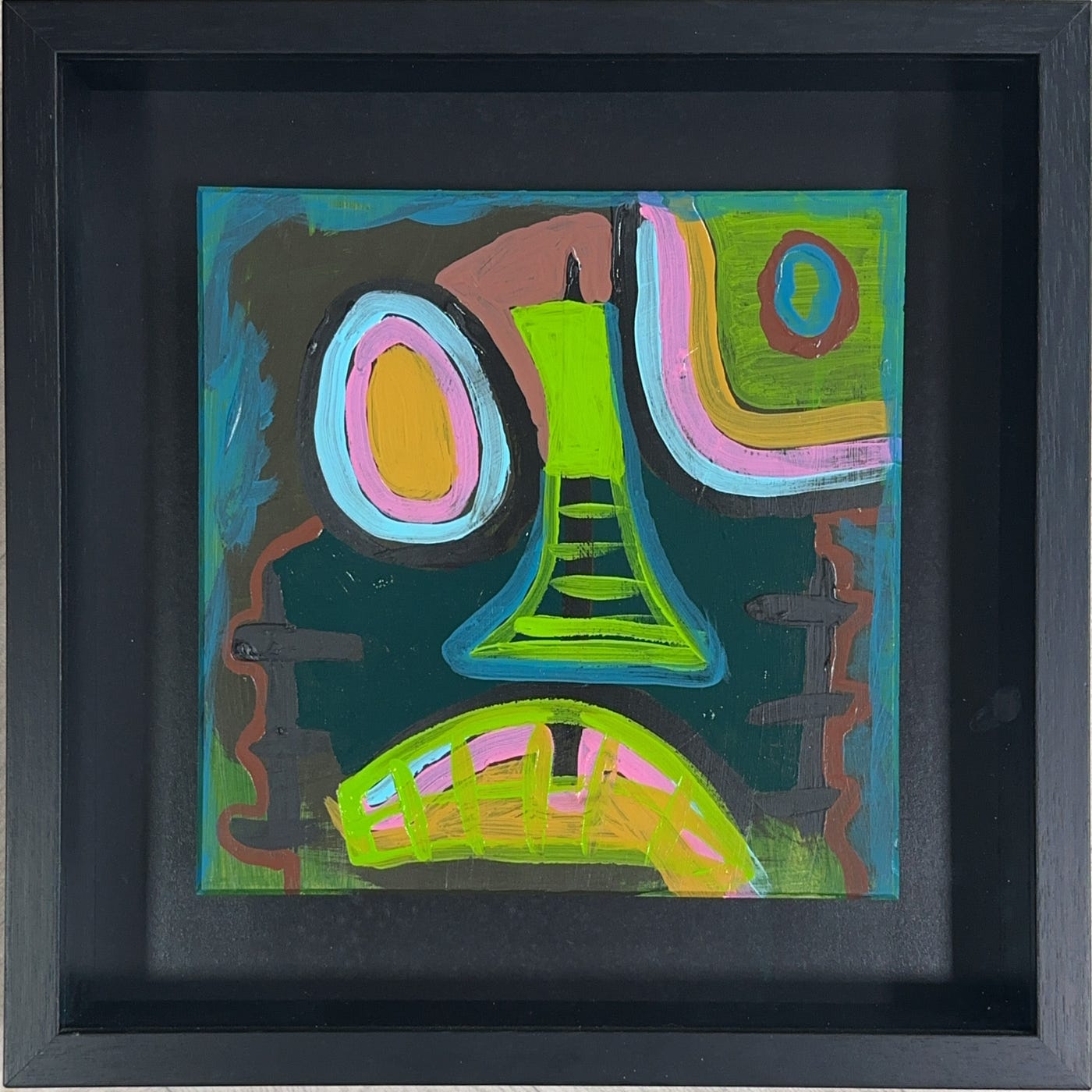
Art in a Disposable Age
Contemporary political, social, and environmental realities are deeply embedded in Otten’s work. He describes his practice as diverse precisely because it absorbs what captures his attention — whether it is war, animal welfare, industrial expansion, or ecological degradation. Environmental issues, in particular, resonate strongly with him. Industry and commerce frequently appear in symbolic or structural forms, reflecting concern for the consequences of unchecked consumption.
His use of recycled materials is both aesthetic and ideological. In what he describes as a disposable culture, reusing discarded objects becomes a quiet act of resistance. By incorporating scrap wood and found elements, Otten not only reduces waste but also infuses his pieces with layered histories. Materials that once served functional purposes are transformed into vehicles of reflection.
He believes artists hold a responsibility to confront viewers with difficult truths. For Otten, art should challenge complacency. It should prompt audiences to reconsider what humanity is doing to the planet and to its inhabitants. While he acknowledges that he does not possess definitive answers, he values the act of raising questions. Through conversation and storytelling around his work, he finds that viewers often begin to reflect more deeply on the issues presented.
Audience Engagement and Political Complexity
Otten has observed increasing awareness around environmental concerns in recent years. Audiences appear more receptive to ecological themes, demonstrating a growing understanding of environmental urgency. Political subjects, however, remain more complex. He notes that political discourse often involves compromise and negotiation, which can make clear artistic positioning more challenging.
Despite these difficulties, Otten emphasizes the importance of free expression within democratic societies. He believes artists must retain the freedom to articulate their perspectives openly, with the understanding that certain extremist ideologies fall outside the bounds of responsible discourse. Creative freedom, in his view, is essential to maintaining a vibrant and reflective cultural landscape.
His work has been exhibited widely, including presentations at the CODA Museum in Apeldoorn and international venues in Paris, Hong Kong, Miami, Mumbai, Vienna, and beyond. These exhibitions have placed his paintings and installations in dialogue with diverse audiences across Europe, Asia, and the United States. His works are also held in private collections in cities such as Paris, New York, and Zurich, demonstrating the broad resonance of his emotionally driven style.
Press enter or click to view image in full size
Stability, Sustainability, and the Artist’s Role
Beyond thematic concerns, Otten believes artists contribute far more to society than is often recognized. They innovate, provoke, and stimulate thought, whether their work is universally appreciated or not. He advocates for greater structural support for artists, including affordable studio spaces and more stable financial conditions, arguing that creative labor deserves sustained institutional recognition.
While his practice incorporates recycled materials and reflects environmental consciousness, his broader message centers on artistic integrity. He resists the pressures of commercialism and remains committed to following his own path. Allowing market forces to dictate creative direction, he argues, risks diminishing authenticity and undermining artistic vitality. For Otten, maintaining personal conviction is essential to preserving creative freedom.
Art as Dialogue
Otten envisions his art as an invitation to dialogue rather than a declaration of fixed truths. By presenting clear yet open-ended narratives within his work, he encourages viewers to engage in discussion. His opinions, he insists, need not be universally accepted; what matters is that the work stimulates thought and conversation.
For aspiring artists navigating complex contemporary realities, his advice is direct: stand for what you believe in. Resist being guided solely by commercial considerations. Remain authentic. Creativity flourishes when it is grounded in conviction rather than market demand.
Arie Otten continues to follow his own intuitive, prolific, and emotionally unguarded path. Through bold strokes, reclaimed materials, and abstracted human faces, he confronts the sublime dimensions of existence. His work does not claim to resolve the tensions of our time, but it insists that we look at them closely, feel them deeply, and speak about them openly.